
Resource Therapy
Working at the root – one part at a time
Resource Therapy is a parts-based therapeutic approach that helps identify and work directly with the emotional states behind unwanted patterns.
Instead of treating anxiety, emotional eating, self-sabotage, avoidance, or inner conflict as isolated problems, Resource Therapy looks for the part of the person that is holding the emotion, belief, response, memory, or protective pattern.
When the right part is accessed and helped directly, change can often become clearer, faster, and more precise.
What is Resource Therapy?
Resource Therapy is a parts-based therapeutic model developed by Professor Gordon Emmerson. It is taught internationally and supported through Resource Therapy International as a structured approach for working directly with the emotional states involved in a person’s presenting issue.
The model is based on the understanding that people have many internal states, or “parts,” and that different parts can carry different emotions, beliefs, memories, responses, and protective strategies.
In Resource Therapy, the goal is not to talk about the problem only from the outside. The goal is to identify the specific state involved in the issue and work with that state directly.
This allows the practitioner to move beyond general discussion and into more precise therapeutic action.
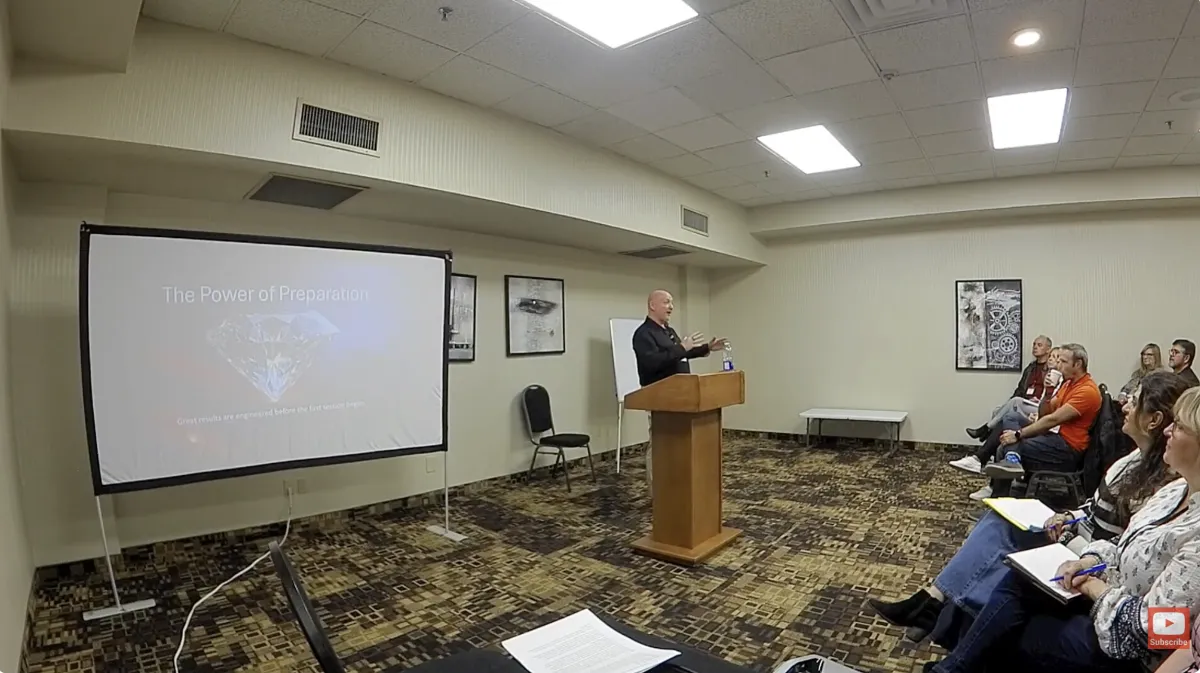
David Galloway is an Advanced Qualified Instructor in Resource Therapy and integrates Resource Therapy principles into his broader work through Diamond Transformation Therapy.

Developed by Professor Gordon Emmerson
Resource Therapy was developed as a structured model for working directly with emotional states and parts.
Supported internationally
Resource Therapy International supports awareness, training, and professional development of Resource Therapy around the world.
Taught by David Galloway
David is an Advanced Qualified Instructor in Resource Therapy and teaches practitioners how to use the model with clarity and precision.
Why Parts Matter
Many people already know what they want to change, but another part of them reacts differently when the trigger appears.
One part wants change
A person may consciously want confidence, calm, healthy choices, or freedom from a repeating pattern.
Another part holds the reaction
A different state may carry fear, protection, shame, anger, grief, craving, avoidance, or an old conclusion.
The right part needs help
Resource Therapy helps locate and work with the specific part that is holding the response, rather than treating the person as one single block.
When the right part is helped, the whole person can begin to respond differently.
How Resource Therapy works
Resource Therapy uses a structured process to identify the state involved in the problem and apply the appropriate therapeutic action.
1. Identify the presenting issue
The practitioner clarifies what is happening, when it happens, and what emotional or behavioural response is repeating.
2. Access the relevant state
The emotional state connected to the issue is contacted directly, rather than only discussed intellectually.
3. Apply the right therapeutic action
Different states need different forms of help. Resource Therapy uses specific actions depending on what the state needs.
4. Review the change
The work is checked and reviewed so the person can notice whether the original issue has shifted.
Resource Therapy and Diamond Transformation Therapy
Resource Therapy is one of the major foundations that informs David Galloway’s Diamond Transformation Therapy.
Where Resource Therapy offers a precise parts-based therapeutic model, Diamond Transformation Therapy expands the work through hypnosis, nervous-system awareness, identity-level transformation, practical integration, and post-session reinforcement.
The two approaches are not in competition. Resource Therapy provides powerful diagnostic and state-based precision. DTT builds on that precision to support broader identity-level and practical change.
Resource Therapy training
David Galloway provides Resource Therapy training for practitioners who want to understand and apply parts-based therapeutic work with more clarity, structure, and precision.
Training is especially relevant for hypnotists, NLP practitioners, coaches, counsellors, and therapists who want a more diagnostic way to understand emotional states, protective patterns, and therapeutic action.
2-Day Foundational Training
An introduction to the core concepts, language, diagnostic thinking, and practical application of Resource Therapy.
Clinical Certification Pathway
A deeper training pathway for practitioners who want to develop clinical competence in Resource Therapy.
Practitioner development
A deeper training pathway for practitioners who want to develop clinical competence in Resource Therapy.
Is Resource Therapy right for you?
For clients
Resource Therapy may be useful if you feel like one part of you wants change while another part keeps reacting, avoiding, protecting, craving, shutting down, or holding on.
For practitioners
Resource Therapy may be a strong fit if you already work with hypnosis, NLP, coaching, counselling, or therapy and want a clearer diagnostic model for parts-based change.
Ready to understand what has really been driving the pattern?
You do not need another generic plan.
You need a clearer understanding of the inner system that has been shaping the problem — and a process designed to help that system change.
Disclaimer: Into Thrive provides educational, coaching, therapeutic, and nutrition-informed support. Results vary by individual, and no specific outcome is guaranteed. Our work is designed to support emotional transformation, practical follow-through, and healthier patterns of change.